
Opposed to Amendment 1 - the "Virginia Fundamental Right to Reproductive Freedom" Amendment
This Amendment Would...
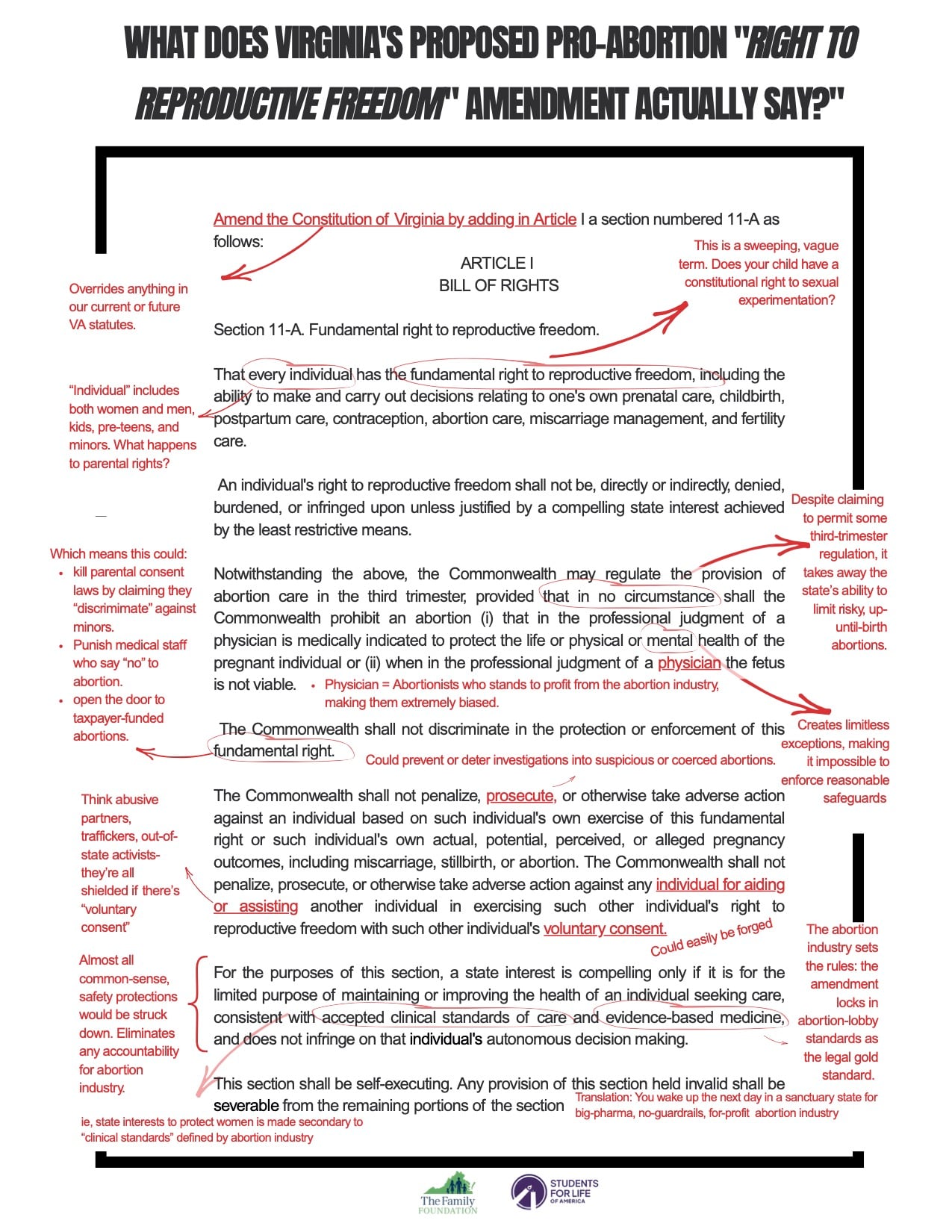
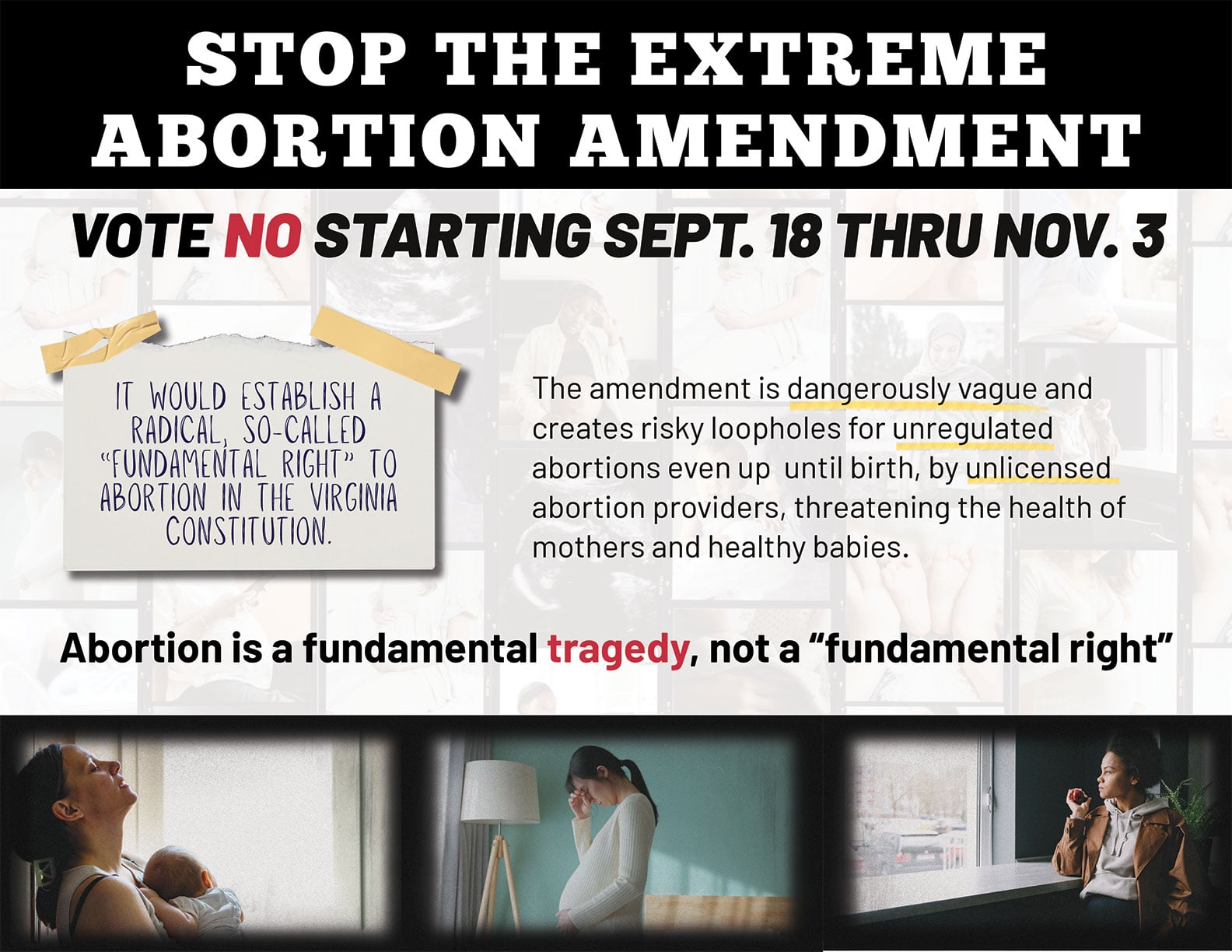
- Establish abortion as a fundamental right in Virginia, superseding current law and likely preventing any future law or regulation on abortion in our state
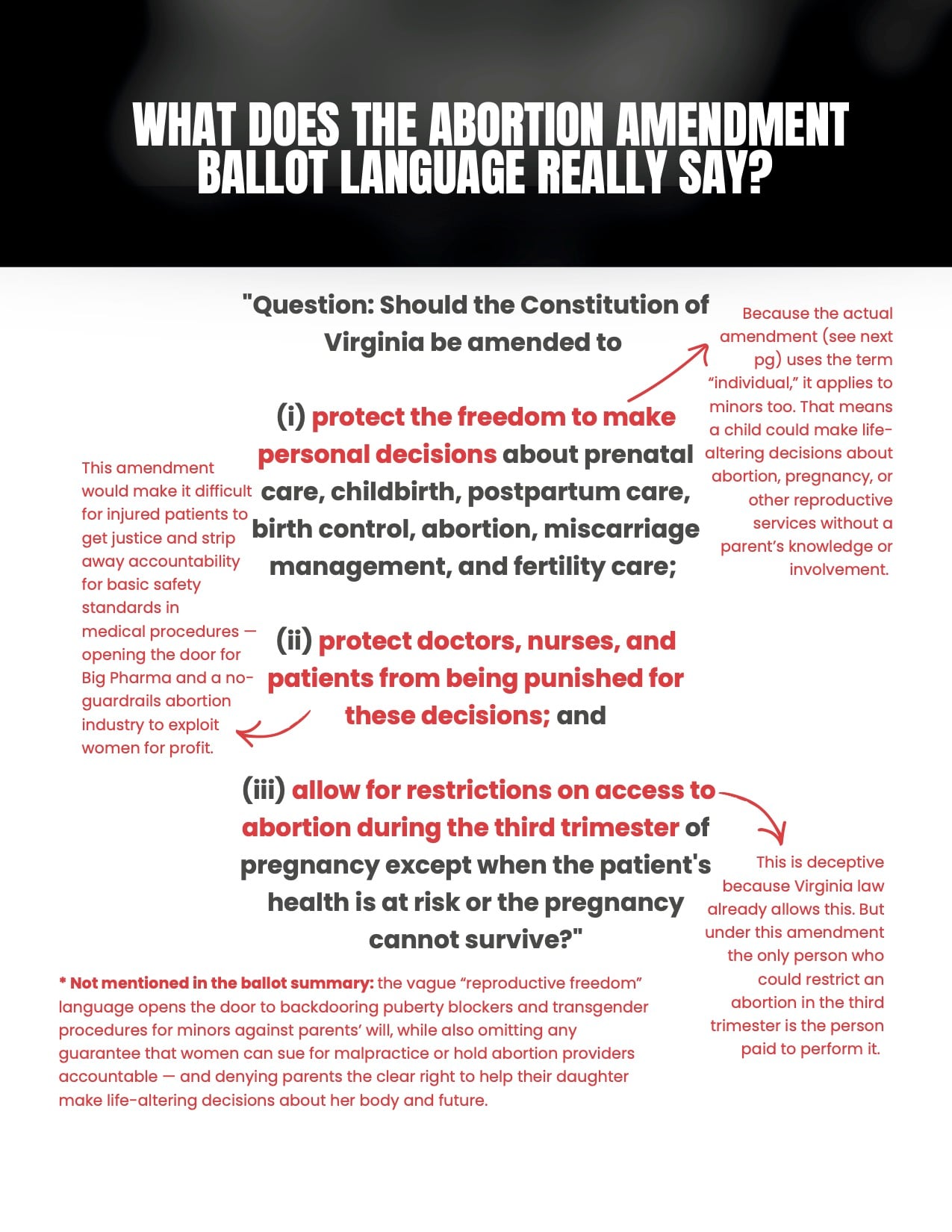
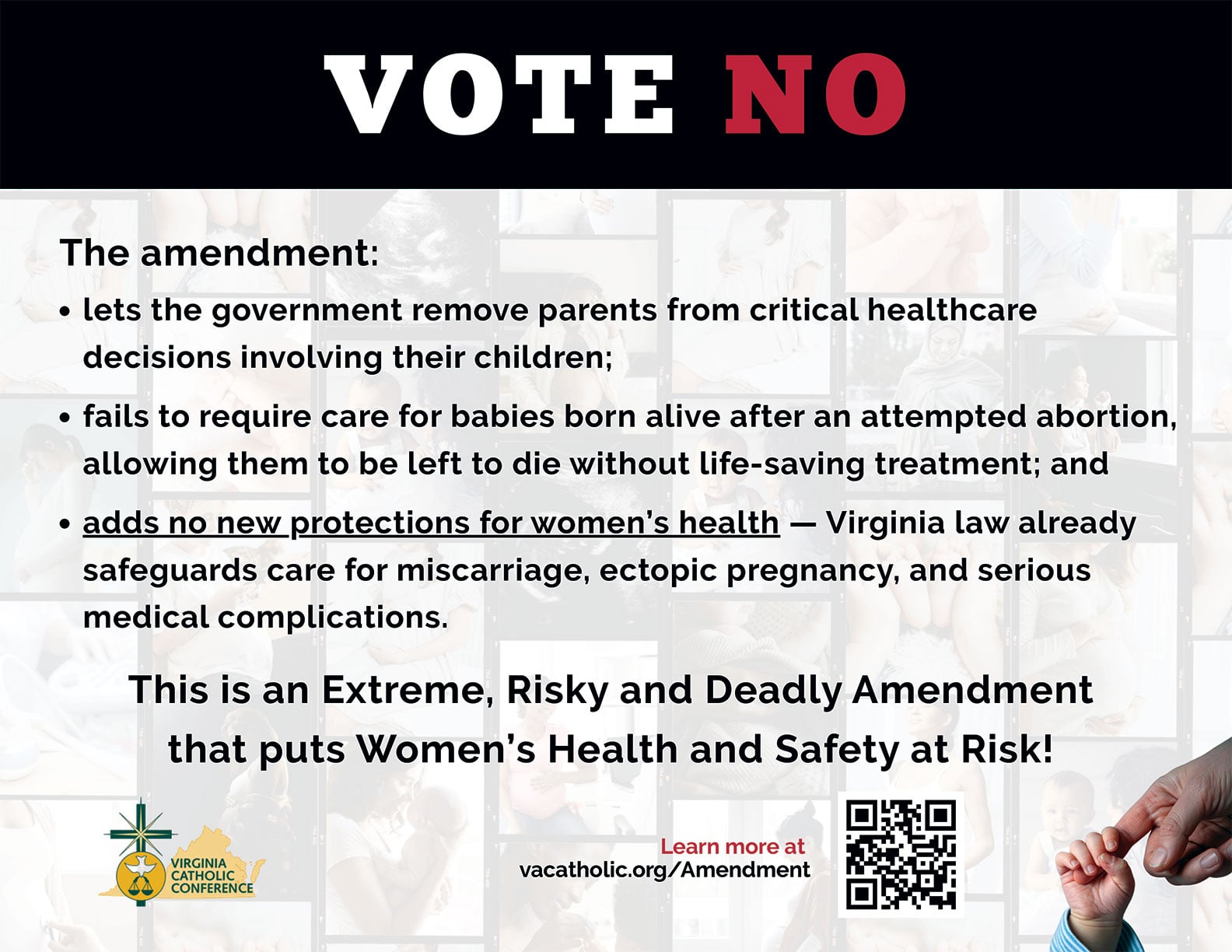
- Threaten the health and safety of women by allowing unregulated abortions to be performed by unlicensed providers at any time, even up to birth at term
- Remove the requirement for parental consent for a minor’s abortion
- Permit abortion to be performed in the third trimester for maternal indications such as anxiety and depression.
View Full Declaration
We, the undersigned medical professionals, wish to warn Virginia voters about the dangers of the proposed “Virginia Fundamental Right to Reproductive Freedom” amendment. While some may believe that induced abortion should be permitted under certain circumstances, this proposed amendment represents a dramatic expansion in abortion in the Commonwealth.
The term “Do No Harm” is often used in the context of providing healthcare based in the Hippocratic Oath we take as medical professionals. This should also be a consideration in the area of governance. The “Virginia Fundamental Right to Reproductive Freedom” amendment will have many intended and unintended consequences that are obvious from the language of the amendment. As medical professionals, we believe the proposed amendment will undermine the safe healthcare of Virginia women, and for this reason must speak out.
Virginia laws and regulations are already permissive regarding abortion. Virginia law permits induced abortion through the second trimester of pregnancy, while even third trimester induced abortions are allowed in specific medical circumstances.1 Current laws contain safety standards that include qualification requirements for those who perform the abortion, standards for facilities where abortion takes place, informed consent procedures, and parental involvement and consent for minors.2 This amendment would remove these commonsense protections that ensure safe and ethical medical treatment. If adopted as an amendment to the Virginia constitution, this amendment will likely prevent any future regulation on abortion in the Commonwealth.
What this proposed amendment does not say is as important as what it does say. The amendment’s language contains no age restrictions and no requirement for informed consent. The amendment eliminates a doctor’s ability to counsel the woman in making her decision, making the amendment irresponsible and dangerous to women. Further, the amendment strips away the conscience protections for healthcare professionals, forcing them to participate in an abortion despite their personal objections or risk losing their jobs. This amendment will not only affect obstetricians and gynecologists but will also impact other primary care physicians and specialists as well.
The primary objective of this proposed amendment is to codify “abortion on demand” for any reason and at any time during a woman’s pregnancy. The amendment states that the Commonwealth may not regulate an abortion that is performed for the “mental health of the pregnant individual.” This will mean that abortions of third trimester (and even full-term) babies will be permissible under the amendment for indications like maternal anxiety or depression.3,4 When pregnancy poses a threat to maternal health in the third trimester, DELIVERY and NOT ABORTION is appropriate medical care, and abortion does nothing to improve maternal safety or health. In addition, it removes the current legal requirement for minors to obtain the consent of a parent before obtaining an abortion, meaning that young women can be influenced by adults who are not their parents.5
This proposed amendment is unnecessary; it is unsafe; and it is unconscionable.
As Virginia medical professionals of all types, we want to continue to provide safe and appropriate medical care to women. Because we care deeply for all our patients, we stand against this radical amendment and feel it is our obligation to tell the truth about it and its impact on our state. We strongly recommend that Virginia voters reject the proposed “Virginia Fundamental Right to Reproductive Freedom” amendment.
1 https://law.lis.virginia.gov/vacodefull/title18.2/chapter4/article9/
2 https://law.lis.virginia.gov/vacode/title16.1/chapter11/section16.1-241/
3 https://lis.blob.core.windows.net/files/1108633.PDF
4 https://static1.squarespace.com/static/60d201847c78ef1e9e5ff099/t/696526d7c6b5ef71c0714ae4/1768236759255/
Abortion+Amendment+explainer.pdf
5 https://virginiamercury.com/2026/02/02/fairfax-case-alleging-school-assisted-abortions-now-in-federal-court/
Will You Affirm This Declaration and Join Us?
Sign & Join Us
Current Virginia Abortion/termination of Pregnancy Laws
By Dr. Timothy Boley
The proposed amendment to the Commonwealth of Virginia, “Fundamental right to reproductive freedom” (Amendment 1) is unnecessary and dangerous for women’s health. It is unnecessary because Virginia laws are already permissive regarding abortion and contain safeguards that help ensure the safety of women who choose abortion. The goal of Virginia Medical Professionals for Women’s Safety coalition is to oppose Amendment 1 and to prevent the abolishment of these safeguards for women’s health from Virginia laws. Addition of the reproductive freedom amendment to the Virginia Constitution will increase the risk for injury and even death to pregnant women of all ages.
The purpose of this article is to inform medical professionals in Virginia about the current state laws regarding abortion. One of the most important things to realize is that there are no laws in any state, including Virginia, that will prevent the delivery of a preterm, term, viable or previable baby in order to prevent the death of the mother. This also applies to abortions being performed in the case of minors.
A majority of state abortion laws are found in the Code of Virginia, Title 18.2, Chapter 4, Article 9. The application of laws regarding abortion are determined primarily by the trimester in which the abortion is performed – first, second or third. Interestingly, the laws do not define the gestational age range for each trimester although 26 weeks 6 days gestation is generally considered the end of the second trimester.
First trimester abortions are lawful at any time during this period. Section 18.2-72 states, “it shall be lawful for (i) any physician licensed by the Board of Medicine to practice medicine and surgery or (ii) any person jointly licensed by the Boards of Medicine and Nursing as an advanced practice registered nurse and acting within such person’s scope of practice to terminate or attempt to terminate a human pregnancy or aid or assist in the termination of a human pregnancy” during the first trimester. There is no requirement for a first trimester termination to be performed in a hospital.
Second trimester abortions are also lawful at any time during this period. Section 18.2-73 requires that only a physician licensed by the Virginia Board of Medicine (BOM) to practice medicine and surgery can perform or attempt an abortion or aid or assist in a second trimester termination. In addition, a second trimester termination can only be performed in a hospital licensed by the State Department of Health or operated by the Department of Behavioral Health and Developmental Services. As of 2019, nonsurgical procedures can be performed outside the hospital.
Although the third trimester is not clearly defined in the law, this is generally determined as the point when the baby is considered viable if delivered. Twenty-seven weeks zero days is often used as the start of the third trimester although much younger babies can often survive with modern and appropriate neonatal intensive care. Third trimester pregnancy termination is more restricted in Virginia. These must be performed by a physician licensed by the BOM to practice medicine and surgery. They must be performed in a hospital licensed by the Virginia State Department of Health or operated by the Department of Behavioral Health and Developmental Services. In addition, third trimester terminations require that three physicians “certify and so enter in the hospital record of the woman, that in their medical opinion, based on their best clinical judgment, the continuation of the pregnancy is likely to result in the death of the woman or substantially and irremediably impair the mental or physical health the woman.” Virginia state law also requires that “Measures for life support for the product of such abortion or miscarriage must be available and utilized if there is any clearly visible evidence of viability” (Section 18.2-74).
As stated above, when an abortion is necessary in a medical emergency, to prevent a maternal death, these requirements are not applicable. The relevant Virginia law is found in the Section 18.2-74.1 which states, “In the event it is necessary for a licensed physician to terminate a human pregnancy… on any woman in order to save her life, in the opinion of the physician so performing the abortion… § 18.2-71, 18.2-73 and 18.2-74 shall not be applicable.”
The issue of partial birth infanticide is addressed in Section 18.2-71.1. This states, “Any person who knowingly performs partial birth infanticide and thereby kills a human infant is guilty of a Class 4 felony.” This section further describes the following: “‘Partial birth infanticide’ means any deliberate act that (i) is intended to kill a human infant who has been born alive, but who has not been completely extracted or expelled from its mother…”. Although it is not specifically stated in this part of Virginia law, infanticide following birth of a liveborn human infant is also illegal.
There are conscience protection laws in Virginia that prevent penalizing medical professionals or facilities that refuse to perform or assist in abortions. This states that “Nothing in §§ 18.2-72, 18.2-73, or § 18.2-74 shall require a hospital or other medical facility or physician to admit a patient under the provisions hereof for the purposes of performing an abortion. In addition, any person who shall state in writing an objection to any abortion or all abortions on personal, ethical, moral or religious grounds shall not be required to participate in procedures which will result in such abortion…” A person, hospital, or other medical facility cannot be punished for refusal or objection to abortion. A person cannot be denied employment for refusal to perform or assist in an abortion.
As with all other medical procedures and treatment, informed written consent is required before performing any abortion or termination of pregnancy. Section 18.2-76 states, “either the physician or advanced practice registered nurse authorized… to perform such abortion… shall obtain the informed written consent of the pregnant woman.”
Regarding abortion on minors, current Virginia law requires a written and notarized consent of an authorized person for a minor to obtain an abortion. An authorized person can be a parent, legal guardian, adult sibling or grandparent with whom the minor resides. Minors who cannot involve the parents can petition the Juvenile and Domestic Relations Court for a judicial bypass. Despite the requirement for parental (or authorized person) consent or court order for a minor’s abortion, there is an exception. Abortion for a minor child may be performed in the presence of a medical emergency if in the physician’s clinical judgement the minor requires an immediate abortion “to avert (their) death or for which a delay will create a serious risk of substantial and irreversible impairment…” (Section 16.1-241(subsection W)).
A few existing laws concerning abortion-inducing drugs are becoming increasingly important. In Virginia, abortion-inducing drugs are available through 10-11 weeks of gestation. In person, abortion-inducing drugs are available through 12 weeks of gestation. In order to protect minors, access to abortion-inducing drugs via telehealth is not currently available for minors in Virginia.
Although current Virginia laws contain important safeguards to protect the lives of pregnant women and minors, there have been some changes in recent years. In 2020, legislative action removed a few requirements that were felt to be obstacles to abortion. For example, the Virginia Reproductive Health Protection Act removed the mandate that specific items be covered in counseling prior to abortion. This Act also repealed the 24-hour waiting period after the counseling session until the abortion could be performed. Even more importantly, the Act eliminated the requirement for an ultrasound exam prior to abortion. The removal of these safeguards is already putting women’s health and safety in jeopardy – Amendment 1 would only exacerbate this.
In summary, although existing Virginia laws are very permissive regarding the performance of abortion, especially prior to the third trimester, safeguards do exist. Amendment 1 will supersede all existing abortion-related laws in Virginia, eliminating these protections to the health and lives of women, and resulting in unregulated abortions potentially by unlicensed individuals or those without proper training throughout the entire pregnancy. This amendment will make legal the equivalent of what used to be called “back-alley abortions.” The result will be injury and death to women. As long as abortion is legal, there should be guardrails for ensuring that women’s lives are protected. As a Virginia medical professional, I urge you to vote “NO” against this dangerous and unconscionable amendment.
References:
1 https://law.lis.virginia.gov/vacodefull/title18.2/chapter4/article9/
2 https://law.lis.virginia.gov/vacode/title16.1/chapter11/section16.1-241/
3 https://lis.blob.core.windows.net/files/1108633.PDF
Timothy Boley, MD is a Virginia-licensed physician who practiced OB/GYN and Maternal-Fetal Medicine for 36 years. He is currently the Medical Director for a Pregnancy Resource Center in Leesburg, VA.
In The News
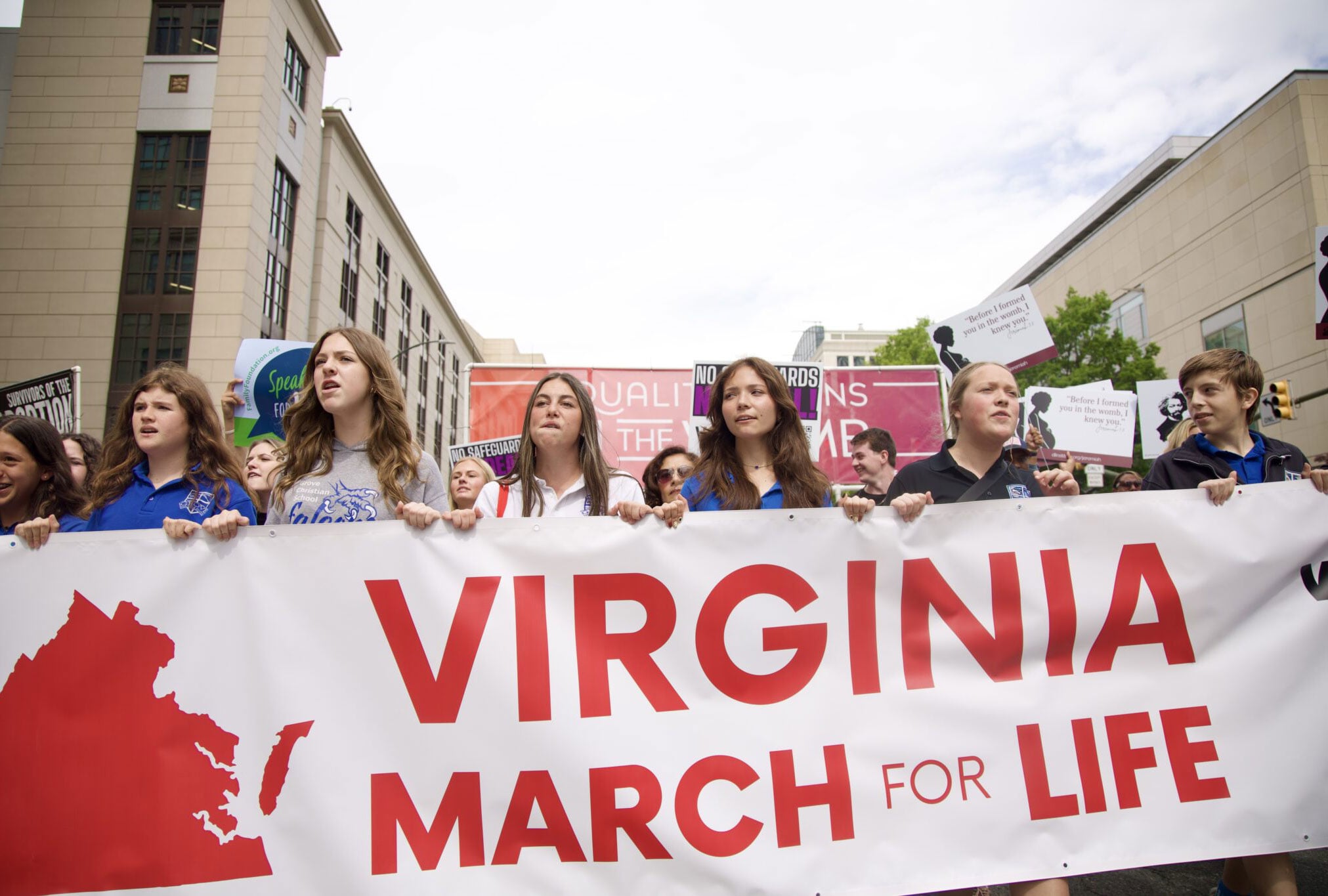
Legal challenge seeking to block Va.’s reproductive rights constitutional amendment dismissed
A Virginia circuit court judge dismissed one of two lawsuits challenging the state's “reproductive rights” constitutional amendment, rejecting claims that a procedural error invalidated the measure, though the plaintiffs plan to appeal to the Virginia Supreme Court as the amendment remains on the November 2026 ballot.